

"I've been doing things in this way since always. I hate this sentence."
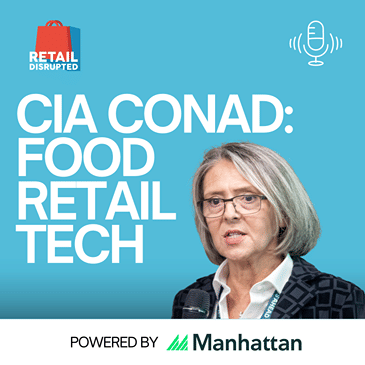
Giorgia Palazzo, who leads innovation, sustainability and information systems at CIA Conad, joins Natalie Berg at Manhattan Exchange in Milan to discuss digital transformation in food retail. They explore the Italian grocery market, what Gen Z shoppers really want, and how technology can make food shopping easier and more sustainable.
In this episode:
- The Conad model: one brand, 3,700 stores, 6 cooperatives including CIA in north-east Italy
- Why Italian grocery is so fragmented: the most apple varieties in the world, plus hyper-local cheese, wine and produce
- What Gen Z really wants: they may cook less, but care more about origin, sustainability and value for money
- The new digital gap: technology is moving quickly and the risk is leaving staff and everyday shoppers behind
- Most retailers are trying to put AI on top of broken processes - fix the process then add the tech
- From forgotten items in the fridge to over-ordering, how can tech tackle food waste?
🤝 This episode is brought to you by Manhattan Associates. For more, visit https://www.manh.com/
ABOUT THE PODCAST
🎙️ Retail Disrupted is an award-winning Top 5% Global Podcast. Every week, retail analyst Natalie Berg speaks with the leaders and disruptors shaping the future of retail.
👉 Subscribe on YouTube: https://www.youtube.com/@retaildisrupted
👉 Subscribe on Apple: https://podcasts.apple.com/gb/podcast/retail-disrupted/id1676107321
👉 Subscribe on Spotify: https://open.spotify.com/show/5H0TALn63ov2VAIJPNi3FM
👉 Follow on LinkedIn: https://www.linkedin.com/company/retail-disrupted/
👉 Subscribe to our newsletter: https://retaildisrupted.substack.com
[00:00:00] The biggest enemy in any project is Ive been doing things in this way since always. I hate this sentence. Yes, things were done in a great way for 20 years, great, but it's a totally new economy, totally new market, totally new opportunities. So challenge everything, discuss everything, don't take anything for granted and redesign before automating. Otherwise you end up exactly
[00:00:29] with the same constraints with just the technology with a new and more sexy name, but you're not gonna gain anything else. Welcome to Retail Disrupted, a podcast that explores all the trends shaping the future of retail. I'm your host, Natalie Berg, and today you're gonna hear from Georgia Palazzo. Georgia leads innovation, sustainability,
[00:00:59] and information systems at Chia Conad. We sat down in Milan to discuss the huge topic of digital transformation in food retail. Georgia's gonna tell us all about the intricacies of the Italian grocery sector, Gen Z shopping habits, what she's seeing in store and online from Tomorrow Shoppers. And Georgia's also gonna share where she sees the biggest opportunities for AI in grocery retail. But before we do that, a huge thank you to our sponsor, Manhattan Associates,
[00:01:28] for connecting us with Georgia and making this episode happen. Manhattan is a global leader in supply chain commerce, working with the biggest brands all around the world. You can learn more by visiting manh.com. Okay, let's get on with today's episode with Georgia Palazzo. Georgia, welcome to the podcast. It's great to have you here. And I know it's been a busy day at
[00:01:54] Manhattan Exchange, but I'm really glad to grab some time with you and learn more about Crucial Retail and the Italian retail market. So welcome. Thank you, Natalie, and thank you for inviting me. Happy to be here and join the conversation. No, thank you. And so tell us, I'm conscious we have a very international audience. Can you tell us a little bit about Conad and your role within the business? Yes, I should start telling you who is Conad. That's the brand. Conad is the main and leading Italian
[00:02:21] retailer in the grocery space, single brand, because we have a higher percentage of market share represented by another company, but has multiple brands. So to be specific, a single brand is a company with a turnover of 22 billion, roughly. And it's it has a unique model, because it's a cooperative model, which is not a franchising, like most of the times people understand this model,
[00:02:50] or compare this model with. We manage the territories in which we operate. We operate all around Italy, with more than 3700 stores. And we separate and manage the territories thanks to six cooperatives. Okay, and I'm part of one of them, Chia, which stands for Commerciante Independiente Associati,
[00:03:14] which means commercial people working together, very fast translated. And I'm responsible for the northeastern part of Italy, our territories. That means 350 stores, 12,000 people turnover, or 3.2 billions. And my role, I'm leading the innovation information technology and sustainability area.
[00:03:41] Wow, exciting. And it must be an exciting time to be in that space, because there's so much change happening in tech. It is. And I know we're going to dive into that. But first, just for our again, for our international audience, can you give us a sense of what grocery shopping is like in Italy? Because I think based on what you've just said, it sounds quite fragmented and very regional. It is very regional. And you have to consider that easily Italy, it has a such diverse production
[00:04:07] all around the country. We have the highest number of apple kinds of the whole world. Just to give you really a small example. We have several kinds of cheese wines, everything is produced locally. And Conard embraced sustainability, as well as efficiency, and giving clients, our clients,
[00:04:32] the ability to find in the stores, products and produce and everything that comes from really close to the area. That's how we aim to become more sustainable. And the shopping habits are changing a lot. Gen Z, they cook way less than, for example, my mother did. But they are way more interested
[00:04:58] about where things are coming from. They are aging of what they're eating, how sustainable what they are eating, what they are putting in the table. And they give a lot of value to their money. So they want value for money back. So it's really, it's a market that is changing, technology shaping the changes, and moreover, an entire world changing in this moment. So it is indeed the most exciting time I
[00:05:27] could think of. Yeah, yeah, it's really refreshing to hear you say that. Because I think, you know, you could also look at everything you've just said and think, wow, I've got to meet a really demanding consumer, there's a lot of tech change, I need to keep up with all that. Just to do a little bit of doom and gloom for a second here. What are some of the challenges or the things that are keeping you up at night? Many of them, but the first one, it's both a professional and personal challenge. I wouldn't just
[00:05:52] call it a challenge, it's a risk. Technology is moving so fast. I mean, I work in technology since almost 38 years. It's my passion, it's my absolute passion. But I never seen it moving so fast as today. So my biggest concern is, is my organization able to catch up with technology?
[00:06:17] And moreover, people in my organization. We don't want to leave anybody behind. You can't leave somebody behind. And if you think about it, that's exactly the same concern I have in my private life. Because I believe there is a huge risk of creating the next huge digital gap. And that's really concerns
[00:06:42] me a lot professionally, because I'm investing so much in technology. And I'm redesigning completely our systems. And they need people to be up to speed. And so we are creating a number of programs to help them being up to speed. But the same risk, I see it in the general population. And I hope I'm mistaken,
[00:07:07] or at least I hope that we will take some countermeasures pretty soon. To address the gap, I suppose. Address the gap, create culture, create understanding. A lot of people, they are depicting AI like in the movies, you know, they want to kill us, all of us. They could probably, but everything passes through humans. And we have to understand that AI, like most of
[00:07:36] technology is just a tool. And we have to learn to use it to empower people, not to make their life difficult. Yeah, that's my opinion. Yeah, I completely agree. And it echoes, it's been sort of said throughout the day, the importance of technology working for people, empowering your people using tech to enhance the experience for customers, rather than the other way around. So I think it's really interesting to hear you say that. The other thing that came up a lot today was the
[00:08:01] importance of good foundations. So it kind of plays into that gap that you were just addressing, because you can have all this technology, but it's meaningless if you don't have the operational capabilities, right? Absolutely. I'd love to get your take on that. As a retailer, what's your take on that gap, the need to keep up, but also having good foundations? That's the second greatest challenge, probably. I was just having a speech about it, extract the
[00:08:27] knowledge from your systems and from the people. There's a lot of knowledge which goes unnoticed in people who are close to operations, because we basically never formalize it. And we definitely need to have a very strong foundation based on the knowledge the company was gaining over the last
[00:08:52] 20, 30, 40 years. Knowledge is power and this is not just a way of saying it's the basis out of which AI can help us being faster, more reliable, and to get to our goals in an easier way. But without knowledge, AI is simply stupid. And that's where we need to concentrate our effort in allowing people to share
[00:09:18] that knowledge with other people, with AI, with systems, to preserve it and to build on it. Yeah, it's the whole kind of garbage in, garbage out thing, but then massively amplified because of AI. Absolutely. So I'd like to hone in on grocery retail a little bit, because I personally feel as an analyst that it's an exciting time. Technology can really address some of the perennial challenges that we've had in grocery retail, something that we do every week. We all buy food. We tend to buy the same stuff
[00:09:47] week in and week out. So I think there's such an opportunity to kind of automate some of that and take the chore out of grocery shopping. And at the same time, I think there's an opportunity to personalize the experience. So there's so much. And I'd love to know as a grocery retail leader, what excites you? Where do you think the big opportunities are? The main opportunity is even before the end-user customer experience is becoming more sustainable. As I mentioned before, I'm responsible also for sustainability. It's my second passion,
[00:10:17] together with technology, and all those data that we have. We produce data every day. Every time you go shopping, I know what you've been buying. And we are using those data to make our self and our impacts more sustainable for the public. And that's the first challenge. And that's the first ambition we have. The second one is to make food shopping, because that's where we are specialized,
[00:10:46] easier and more close to what really the people want. I mentioned before, people, they want to know where is this product coming from? What there is inside, how this meat has been produced, how this fish has been brought to my table. And thanks to technology, everything can, it's a doable right now.
[00:11:11] But we really have to understand deeply also thanks to a board of our consumers. So asking to our customers, what would you like to find in our virtual store as well in our physical store? And obviously AI and agentic AI are going to be part of it. But in my opinion, they should be embracing the ability of each
[00:11:38] single customer to make choices, not pushing choices on their behalf. I mean, some people think that it's going to be such a game changer, especially in grocery, because again, it's something that's habitual and a routine purchase. So what's your kind of outlook? And I appreciate, I never ask anybody kind of five-year outlook anymore, because as you say, the pace of change is just too quick. But what's your outlook over the next kind of 12 months with AI and agentic? Where do you see that moving towards?
[00:12:06] Well, for sure, I think that end user assistance is going to change a lot. If I think about the experience on several e-commerce, for example, they are still not so user friendly. And the user are changing. We have elders, we have seniors, as well as Gen Z or Gen Alpha, where they are born with a smartphone in their hands. And we should be able, what I see, it's a big change in how people
[00:12:35] interact with those systems, making it more natural. I'm going to be driving for the next three hours. And honestly, I would love to just dictate my shopping list to my personal grocery assistant. And I need it to tell me also what's inside of my house. What am I missing? And moreover, how I could
[00:12:58] cook everything which I'm buying. Because as you may imagine, as well as I'm well-versed in technology, well, I'm a terrible housewife. You can't have time for everything. That's okay. I don't care. Well, maybe in the future, AI will be cooking for us as well. It'll be doing everything. Not really. Hopefully not. Because it will take out some joy. You know, Italians have a very strong
[00:13:25] relation with food. The food is an experience. We stay around the table, but we stay also around the kitchen while we're cooking and we talk and we drink wine. So that would be a pity. But yes, it's a great enabler for the future, I believe. Yeah. No, it's interesting. I agree with you. And I think from a customer experience perspective, those are perennial issues that, you know, we've been talking about smart fridges, for example, for like 25 years, right? Yes. That's always sort of been on the minds, I think, of retail leaders is how can we
[00:13:54] improve this experience for the customer? And it does genuinely feel like with AI, there are opportunities, even things as simple as, you know, just reorder me what I ordered last week. You know, just make it as simple, whether you're in the car or it's easier for you to do click and collect whatever, wherever you are as a customer in that moment. And it's also a big sustainability enable, both for families. You know how much trash we are
[00:14:18] producing, how much food waste in each and every country, unacceptable. Sometimes because we forget things in the fridge, we don't read the expiration date and then going up in the supply chain because we order too much, we don't order well enough and so on and so on and so on. And AI, big data,
[00:14:40] obviously not just AI, everything is AI, but all the different nuances of AI, I believe would enable our world, our segment to be way more sustainable than it is today. And that's what I'm aiming at. Yeah, no, it's super interesting. I think you're right around food waste and also bearing in mind this is a sector that runs on very thin margins where even the smallest improvements when done at
[00:15:08] scale really make a massive difference, whether that's for the bottom line or for the sustainability. Yes, it is. It is a very good reason right now to invest in this technology. I like what you said because sometimes you, as an innovator, you have to explain why you want to pursue certain projects and not always you have a technical audience on the other side, vice versa. You have a board of
[00:15:35] directors that are looking at margins. And when you're able to explain that even a small KPI, a percentage of increase on a single KPI, it's on such a wide number of items, increasing the marginality while they listen to you and the project all of sudden becomes doable. So, are two phases of the same
[00:16:01] way to approach this revolution that the technologies bring into our field. In some cases, you talk about margins and money. In some cases, you talk about being more sustainable depending on the audience, but they both work. Yeah, and they often go hand in hand, don't they? Yeah, that's what my company choose to do, putting innovation, technology and sustainability all together.
[00:16:25] I have a quite visionary management. In my field, in Italy, it's not so common to think that all three things should go together to have the best results. So, I'm also a lucky professional somehow. Yeah, fantastic. A final question for you, Georgia. What advice do you have for other retailers out there who are navigating all this disruption, transforming their businesses, trying to work out which technology
[00:16:51] to invest in? What advice would you give them? Challenge everything. You know, the biggest enemy in any project is, I've been doing things in this way since always. I hate this sentence. But you can't expect other people to change if you don't do it by yourself. You have to start with yourself. So,
[00:17:15] challenge every process, every decision. Yes, things were done in a great way for 20 years. Great. But it's a totally new economy, totally new market, totally new opportunities. So, challenge everything, discuss everything, don't take anything for granted and redesign before automating. Otherwise, you end up
[00:17:40] exactly with the same constraints, with just the technology, with the new and more sexy name. But you're not going to gain anything else. Yeah. Fantastic. Georgia, thank you so much for your time. Thank you for inviting me for the conversation, Natalie. Thank you for listening to Retail Disrupted. If you enjoyed this episode and would like to support the podcast, please leave a rating or review or share it with others. It really makes a difference.